

Microducts is future-proof solution
Microduct conduit can be an economical solution for reducing network building, construction and reinstallation costs.
As digital transformation accelerates, the demand for high‑capacity, flexible, and cost‑efficient network infrastructure has never been greater. Microduct technology offers a scalable pathway to meet current needs while preparing for tomorrow’s innovations.
Ideal option to expand existing fiber network and increase bandwidth for future use.
The smaller cables allow for smaller enclosures and can be placed in existing vault and pedestals.
One microduct can house up to 288 fibers. Additional extra ducts can be left open, allowing pathways for future expansion.
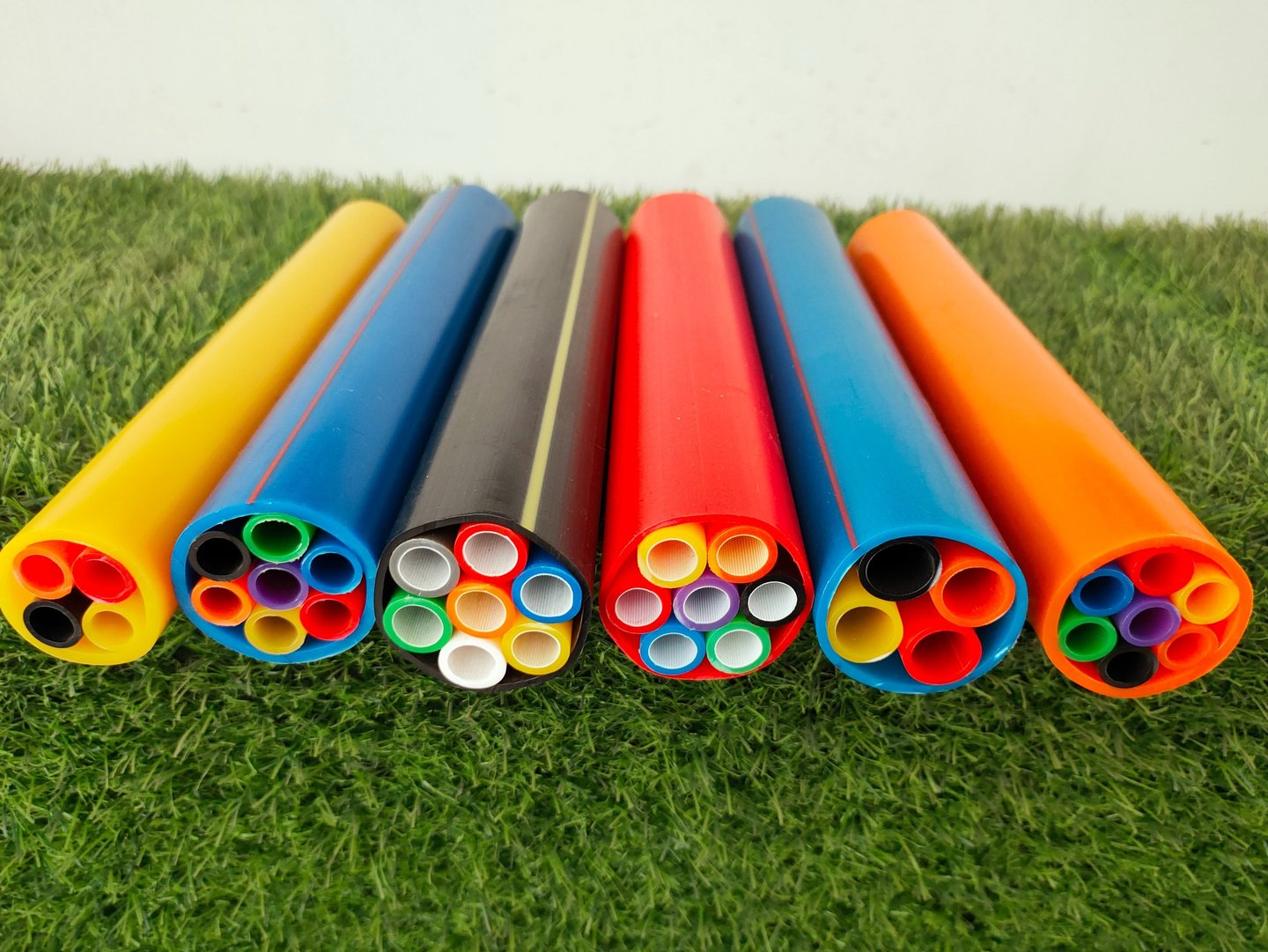
Microducts typically range between 3 mm and 20 mm, are smaller in size and weigh significantly less than conventional cables.
Microducts are not just a technical innovation, they are a strategic investment. By combining scalability, sustainability, and cost efficiency, they provide a future‑proof foundation for the digital economy. Organizations that adopt microduct solutions today position themselves to meet the bandwidth demands of tomorrow with confidence.

Scalability: Microducts allow incremental deployment of fiber. New cables can be blown in as demand grows, eliminating the need for disruptive excavation or costly rebuilds.
Flexibility: Their modular design supports diverse applications—FTTH (Fiber to the Home), smart cities, 5G backhaul, and enterprise networks—making them adaptable to evolving technologies.
Cost Efficiency: By reducing civil works and enabling phased investment, microducts lower both initial and long‑term costs. Operators can expand capacity without overbuilding.
Minimal Environmental Impact: Smaller ducts mean less trenching, reduced material usage, and faster installation, aligning with sustainability goals.
Longevity: Designed to house multiple generations of fiber, microducts extend infrastructure life cycles, ensuring networks remain relevant for decades.
The Microducts Solution, Microduct conduit can be an economical solution for reducing network building, construction and reinstallation costs. Microducts and micro-cabling offer an alternative and less expensive option to rebuild, enhance and improve data pathways for increased data demand. Together, they represent a technological step-change for updating and enhancing the country’s existing and aging communications infrastructure.
Ease of Installation of Microducts, microduct products may be installed in direct burial applications via micro-trenching or in microduct pathways via air blowing techniques or traditional cable pulling/pushing. Microducts future-proof networks since additional fiber cables can be placed at a later time in response to demand and capacity increases. Often additional microducts are installed and left open/vacant, providing pathways for future expansion. Alternatively, higher density, higher fiber count microcables can easily be pulled through existing conduit to replace conventional cabling. It comes in a wide range of sizes and colors, from direct bury, direct install and aerial microduct cabling, to thick wall and flat duct cabling, providing the optimal solution to your next cabling project.


Recent improvements in fiber construction have made microducts an economical option to traditional cabling products and provide a robust solution for upgrading today’s aging infrastructure. Microducts are small conduits for housing fiber cabling in a tight, safe casing. They can be pre-installed within a larger conduit or simply pushed into existing conduits already in place. It is not necessary to install conventional cabling for each data upgrade and enhancement project.